03 — What each project provesRoof condition. Specification. Programme. Sign-off.
Each project proves how the work was controlled — roof condition at the start, specification route, materials used, programme constraint, access method, sector requirement and evidence supplied at completion. Projects are identified by the property or venue — the building, theatre or estate the work was carried out on — not by the client or buyer organisation.
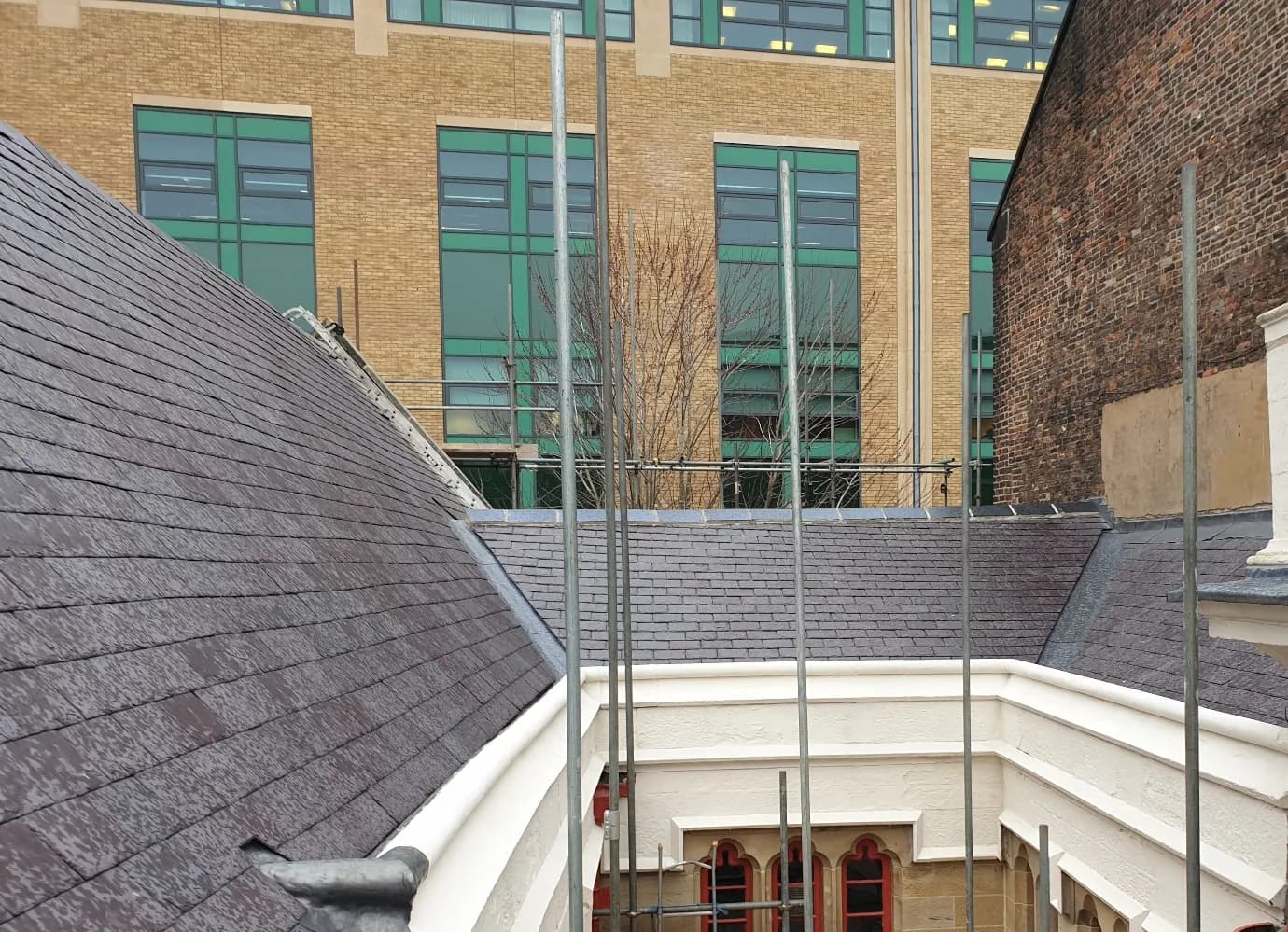
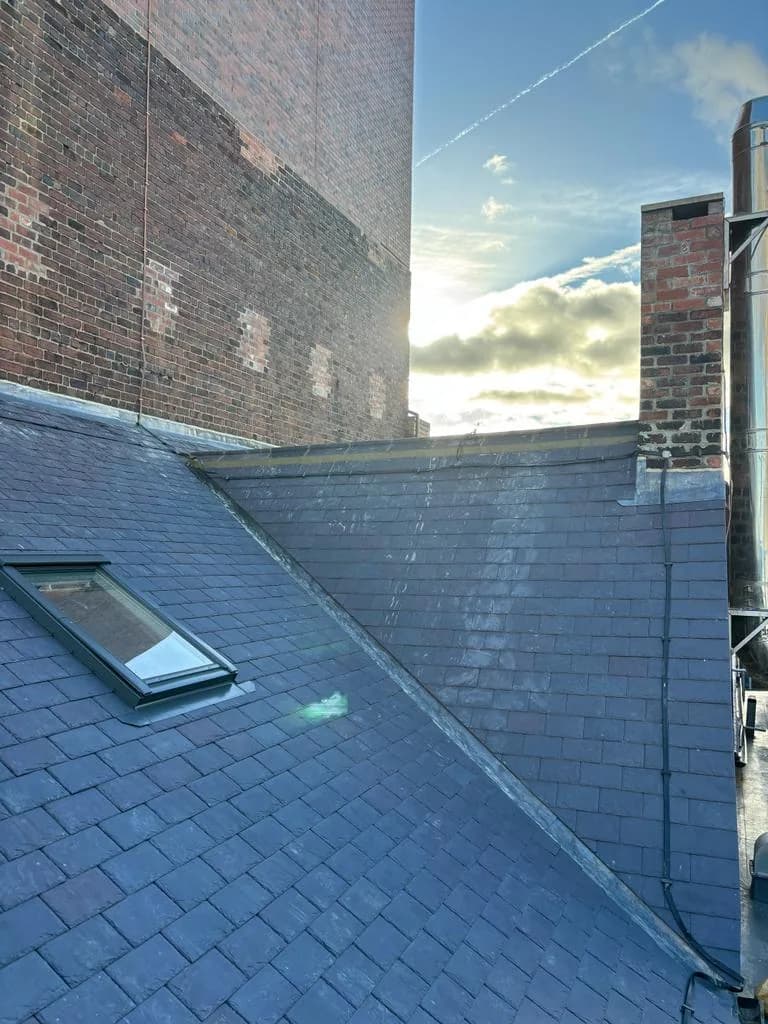
For flat roofing work, each project identifies the system where possible: EPDM rubber, single-ply membrane, built-up felt, modified bitumen, mastic asphalt or liquid-applied coating. For pitched roof work, it identifies slate, tile, fibre cement, lead flashing, valleys, ridges, verges or associated roofline details.
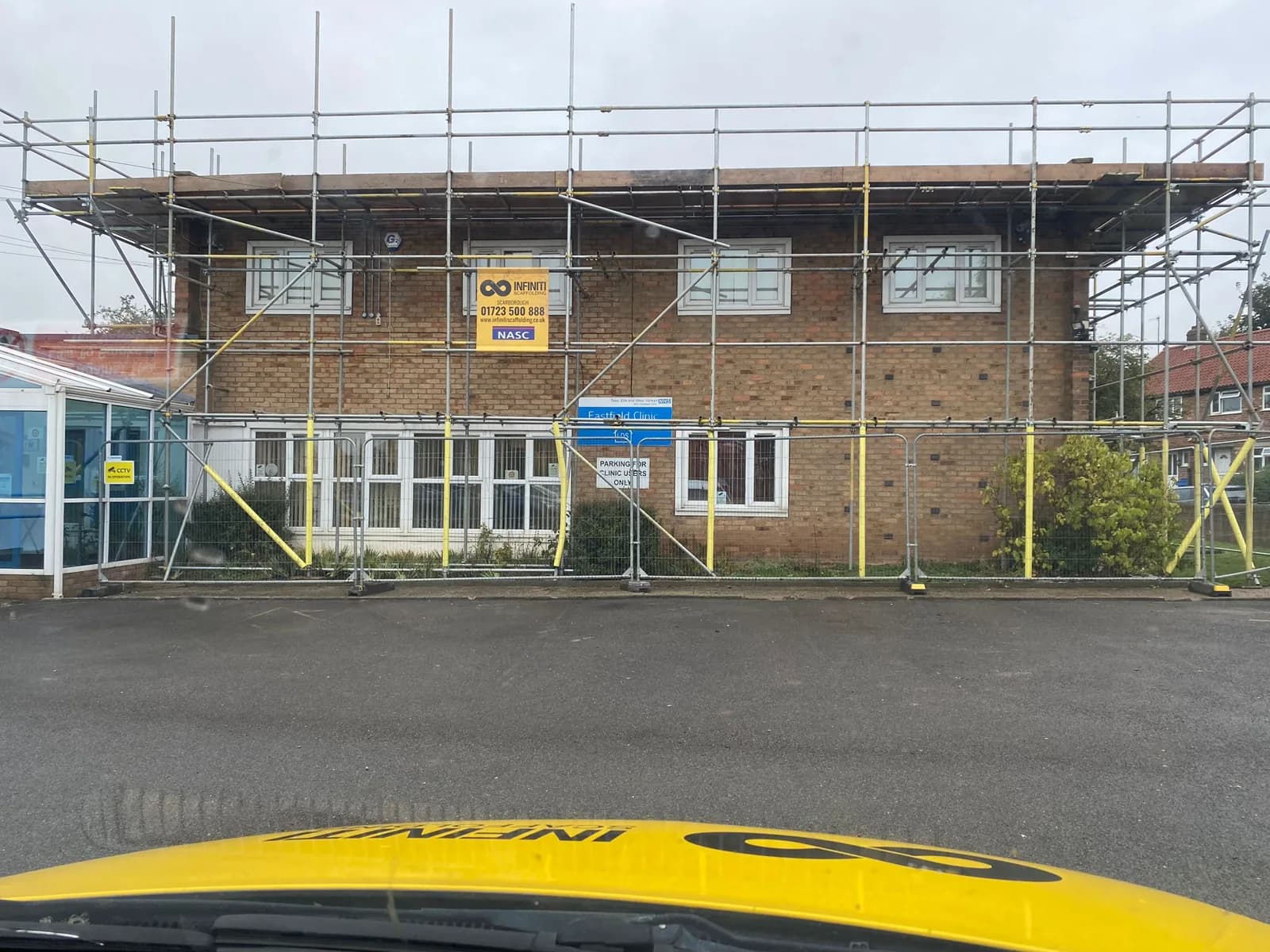
For public sector and managed property work, each project notes the relevant operational controls — RAMS, occupied building access, tenant communication, safeguarding awareness, working around service users, staged works, temporary make-safe work and signed-off completion.
04 — Sector breadthSpecific examples, not vague proof.
Evenii works across commercial and public sector environments where roofing or landscape works have operational consequences — NHS estates, housing associations, schools, local authority buildings, housing developers, main contractors, construction companies and property management portfolios.
Sector breadth does not become vague proof. Every project states the actual building type, roof type and working constraint so the reader can see whether the example is relevant to their own site.
A housing association asset manager looks for tenant impact, volume capability and clear reporting. An NHS estates reader looks for access control, compliance and reduced disruption. A main contractor looks for programme behaviour, pre-start documents and reliable site communication.